MimiSelect
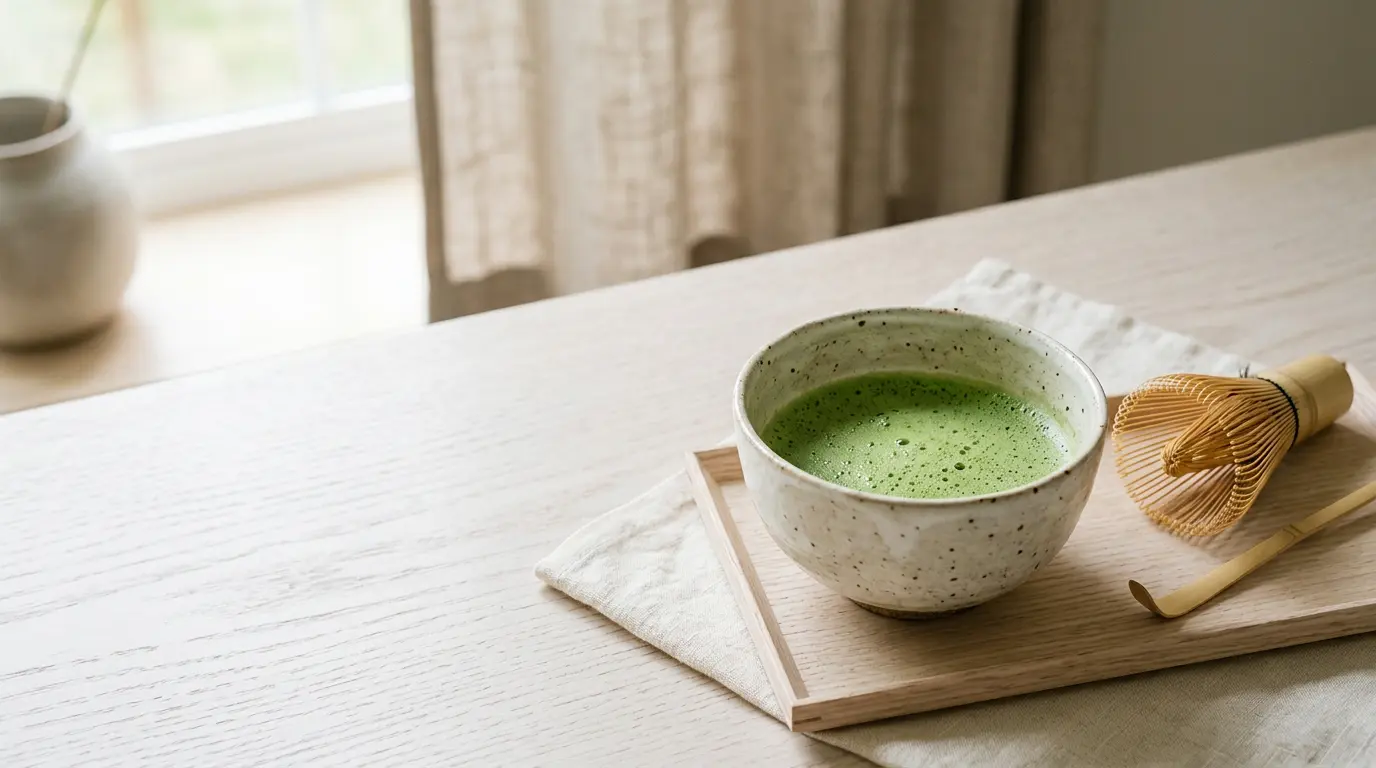
A bowl of frothy matcha beside a bamboo whisk on a wooden tray

Matcha & Tea

From your first bowl of whisked matcha to everyday green tea, these finds and guides make Japanese tea easy to enjoy at home.

2 finds

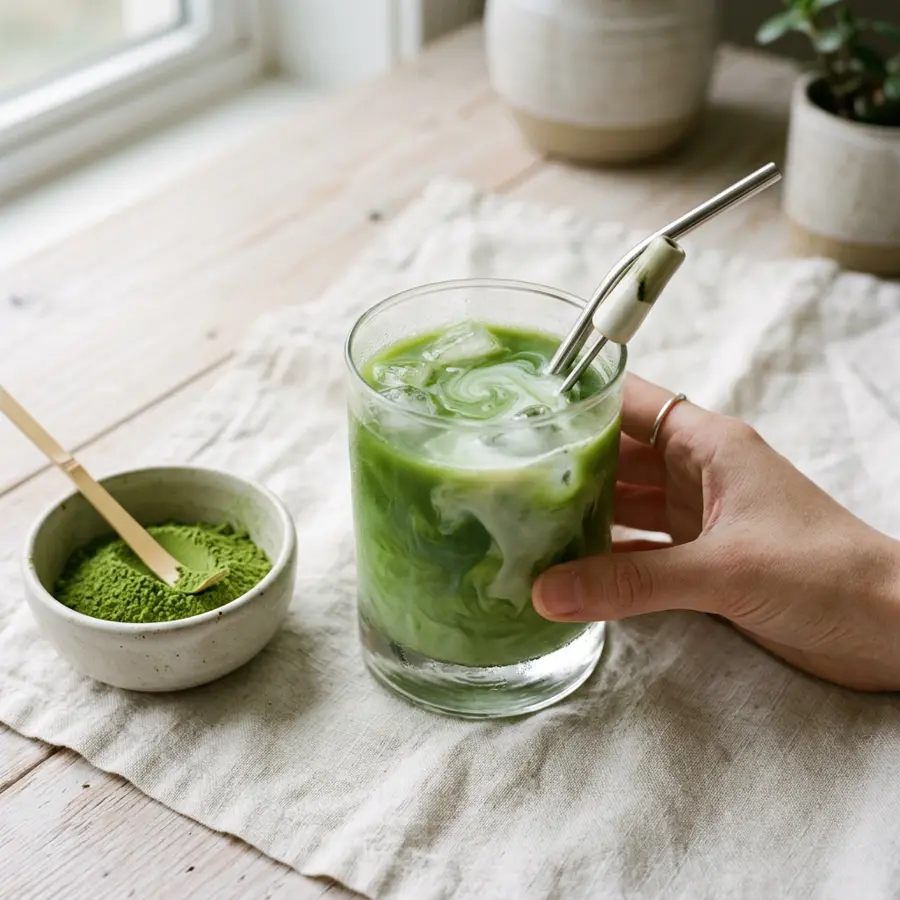
An iced matcha latte next to a small bowl of matcha powder

What is matcha?

Whole green tea leaves, stone-ground to a fine powder

Matcha comes from tea plants that are shaded before harvest. The leaves are steamed, dried, de-stemmed, and ground into a fine powder. Because you whisk the powder into water and drink the whole leaf, matcha has a deeper color and fuller flavor than steeped green tea.

Its taste is often described as fresh, vegetal, and gently sweet, with a savory "umami" note and a light, pleasant bitterness.

Ways to enjoy

Find your favorite way to sip

There is no single right way to enjoy matcha. Start with whatever sounds delicious to you.

Usucha (Thin Tea)

The everyday way to drink matcha. About 1–2 g of matcha whisked with roughly 2.5 oz (70 ml) of hot water until a light foam forms. Smooth, grassy, and gently sweet.

Koicha (Thick Tea)

A rich, glossy tea made with about twice the matcha and half the water, kneaded slowly rather than whisked. Traditionally made with high-grade ceremonial matcha.

Matcha Latte

Whisk matcha with a splash of hot water into a smooth paste, then pour in steamed milk or a plant-based milk. Sweeten with honey or maple syrup if you like.

Iced Matcha

Whisk matcha with a little cool water, then pour it over ice with cold water or milk. A refreshing pick for warm afternoons.

Baking & Desserts

Culinary-grade matcha adds color and a soft bitterness to cookies, cakes, smoothies, and ice cream.

How to whisk

Your first bowl in five easy steps

  1. 01

    Warm the bowl

    Pour hot water into your bowl, swirl it, and soak the whisk tips briefly to soften the bamboo. Discard the water and dry the bowl.

  2. 02

    Sift the matcha

    Sift about 2 scoops (1–2 g) of matcha into the bowl. Sifting breaks up clumps so your tea turns out smooth.

  3. 03

    Add water

    Pour in about 2.5 oz (70 ml) of water around 160–175°F (70–80°C). Boiling water can make matcha taste harsh.

  4. 04

    Whisk

    Hold the bowl steady and whisk quickly in a zig-zag "M" or "W" motion from the wrist for 15–30 seconds, until fine foam forms.

  5. 05

    Enjoy

    Lift the whisk gently from the center to leave a soft peak of foam. Drink it right away while the foam is fresh.

Beginner tools

A simple starter toolkit
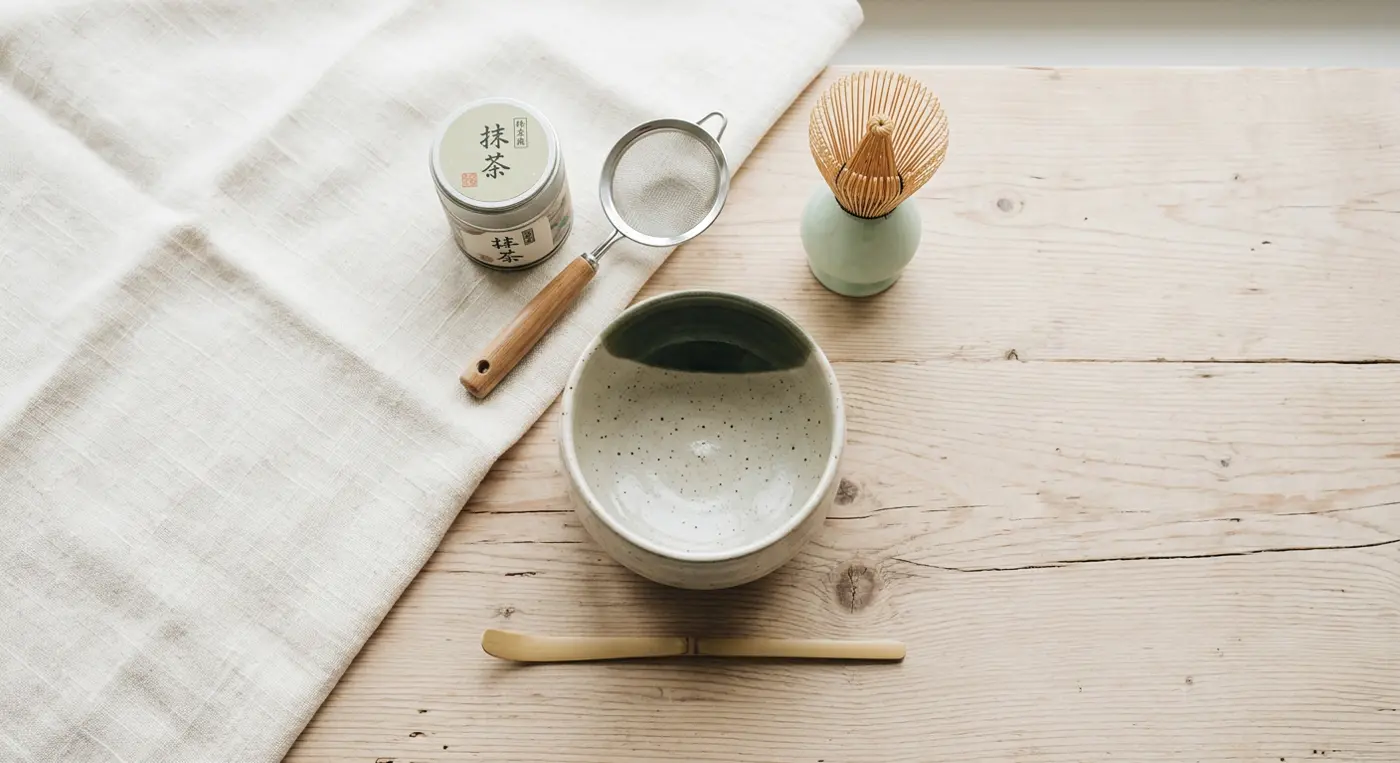
You do not need a full tea-ceremony set. These few tools — most of them made from bamboo or ceramic — make everyday matcha easy and enjoyable.

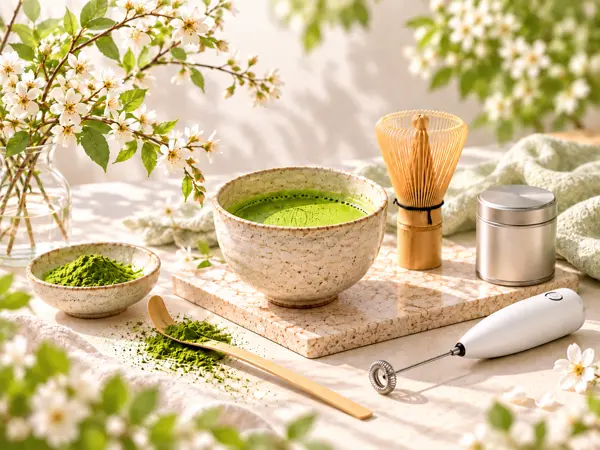
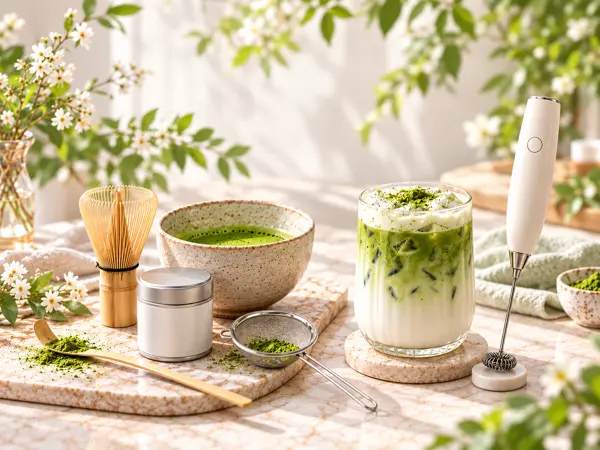
Matcha tools laid out on a wooden table: a tin of matcha, a sifter, a whisk on a holder, a bowl, and a bamboo scoop

Chasen

Bamboo Whisk

The essential tool. Its many fine bamboo prongs create the light, creamy foam that a spoon or fork cannot. Soak it in warm water before use.

Chashaku

Bamboo Scoop

A slim bamboo scoop for measuring matcha. One heaped scoop is roughly 0.5–1 g, so 2 scoops makes a typical bowl.

Chawan

Matcha Bowl

A wide bowl with plenty of room to whisk. Its flat bottom and broad shape make foaming much easier than a mug.

Furui

Fine Mesh Sifter

Matcha clumps easily. A small sifter or tea strainer keeps your tea silky and lump-free.

Kusenaoshi

Whisk Holder

A ceramic stand that helps your whisk dry in shape after washing, so it lasts longer. Nice to have, not required.

Natsume / Tin

Airtight Container

Matcha is sensitive to light, air, heat, and moisture. Keep it sealed, and refrigerate opened tins if you can.

Matcha FAQ

Questions beginners often ask

What is the difference between ceremonial and culinary matcha?

These are common marketing terms rather than official grades. "Ceremonial" usually refers to matcha intended for drinking straight with water, and tends to be more vibrant and mellow. "Culinary" is usually meant for lattes and baking, where a bolder flavor works well with other ingredients.

Do I really need a bamboo whisk?

For traditional, foamy matcha, a bamboo whisk makes the biggest difference. If you only make lattes, a small handheld milk frother can work as a starting point.

How should I clean my tools?

Rinse your whisk and bowl with warm water only — no soap — and let them air-dry fully. Wipe the scoop with a dry cloth.

Does matcha contain caffeine?

Yes. Matcha is made from whole ground green tea leaves, so it contains caffeine. Amounts vary by product and serving size, so check the product label.